
For a grill OEM or parts buyer, tube, cast and ceramic infrared burners are different starting architectures, not a simple good-better-best ladder. Choose a shortlist around the appliance’s function, space, mounting and gas conditions. Then confirm material, interfaces and validation for the selected design rather than buying by appearance or an unsupported output claim.
What designs are available to compare?
The burner collection presents twelve designs across tube, cast, infrared and portable groups. Examples include straight and shaped tubes, cast bodies with different layouts, and ceramic-faced assemblies. Those are documented design references, not a promise that every configuration is ready for every grill.
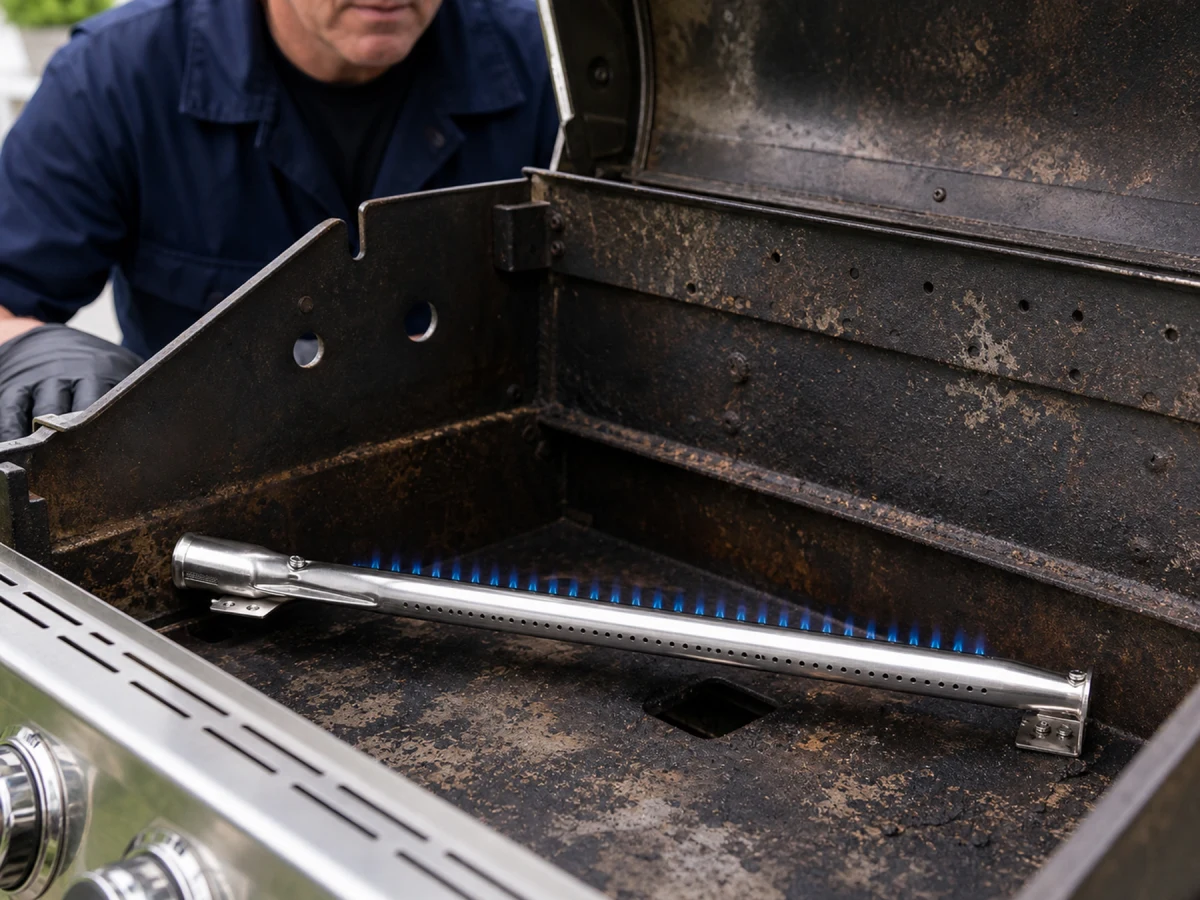
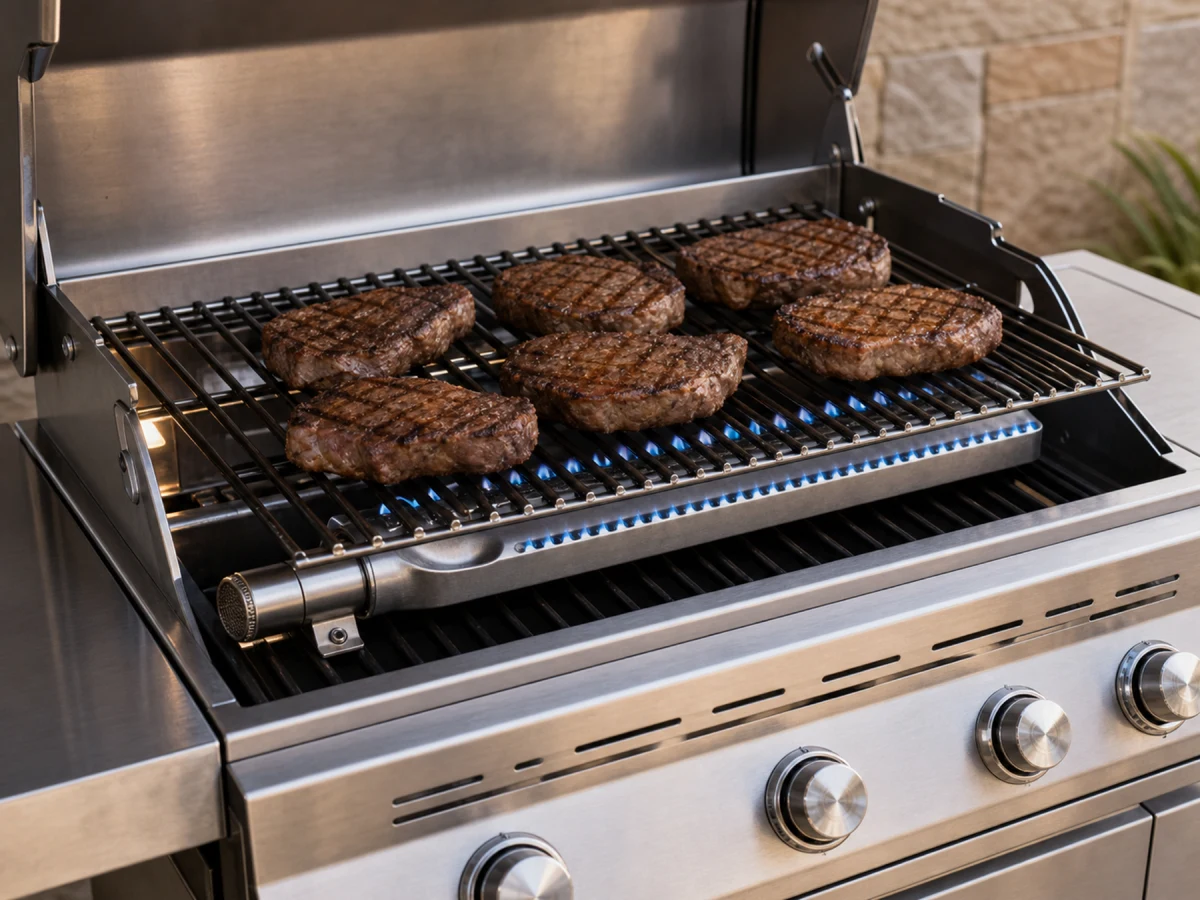
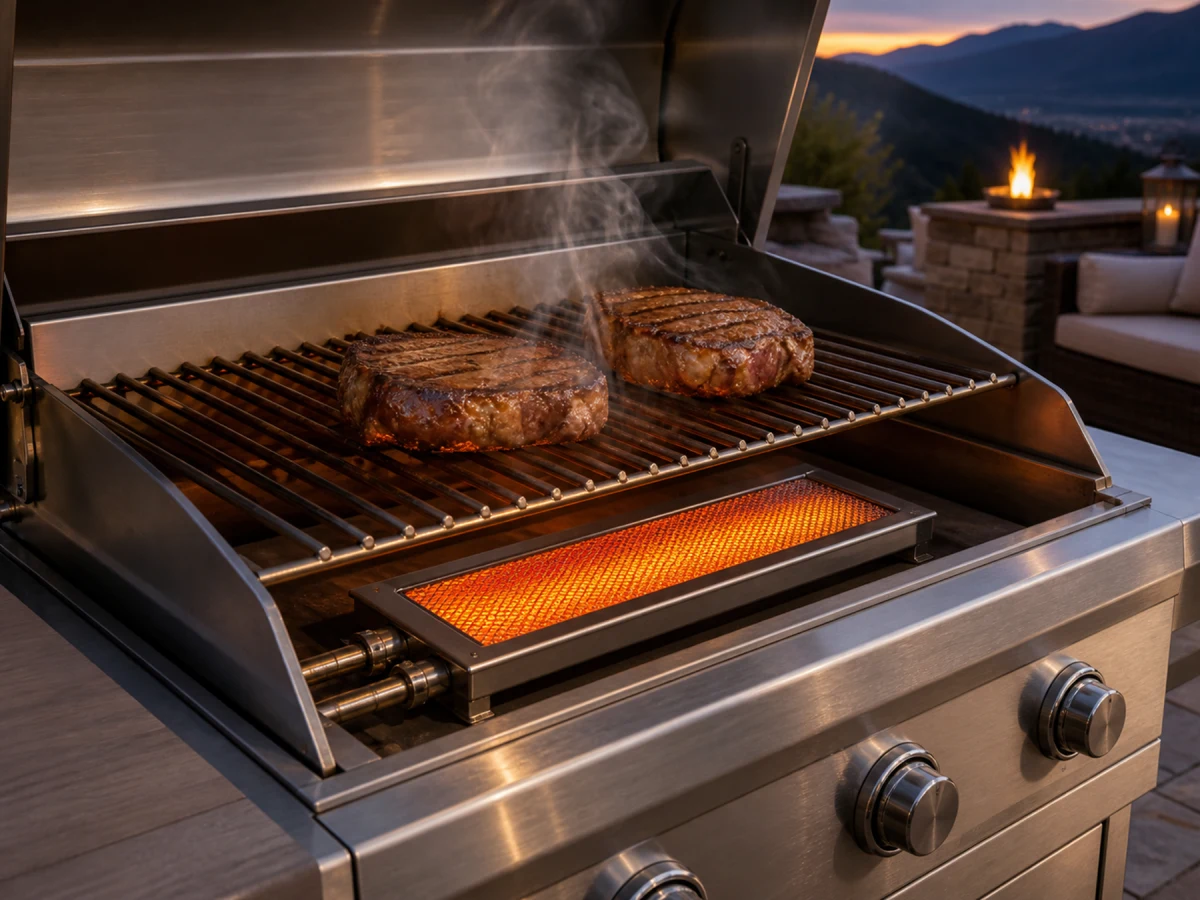
Photographs help identify construction and layout. They do not establish material grade, output, service life or replacement compatibility.
How do you compare architectures without inventing a ranking?
Swipe or scroll sideways to see all columns.
| Architecture | Reference designs in the range | Questions for your engineering brief |
|---|---|---|
| Tube | Straight, U-shaped and shaped tube sets | Which envelope, port arrangement, inlet and mounting details fit the appliance? |
| Cast | Bar, rectangular, H-shaped and ring examples | Which body layout, material and interfaces are required? |
| Ceramic infrared | Sear, back-burner and larger framed examples | Which face size, housing, position and gas-system integration are intended? |
| Portable group | Tube kit with support and connection details | Which appliance, brackets and connection set define the actual assembly? |
The group labels organize the collection. They are not a test comparison and should not be used to infer that one option is always hotter, longer-lasting or more economical.
What should a new grill project define first?
Describe the burner’s function and installation position. Show the space available, relationship to the cooking surface and neighboring components, and any interfaces that cannot move. Include relevant assembly views, not only an isolated part drawing.
State the intended gas, supply pressure with units and target heat input with units. Identify the valve, injector interface, controls and ignition arrangement where known. Mark unknowns clearly for review instead of copying a value from an unrelated appliance.
Use the custom burner specification guide to turn those inputs into a development brief. An architecture shortlist is useful only when the operating system is also defined.
What changes when the job is replacement supply?
An aftermarket range starts with an existing host appliance and original part. Model identity, mounting, inlet alignment and operating conditions matter alongside the architecture. Two tubes of similar length are not necessarily replacement matches; a cast body with a familiar shape is not automatically compatible with a named grill brand.
Use the replacement measurement checklist and discuss Aftermarket & Replacement Parts. Keep confirmed fit separate from an initial visual shortlist in your own catalogue.
Which material and performance claims need evidence?
Record material grade and relevant section or wall requirements in the specification. Do not equate a polished appearance with a particular stainless grade, or a heavy-looking body with a defined service life.
If your brand needs a heat-input, temperature, fuel-use or durability claim, define the test basis for the actual configuration. A brochure illustration is not a measurement record. Component documentation also needs review before being used as evidence for a complete appliance.
Common mistakes are choosing by headline output, treating gas types as interchangeable, and using an image as proof of universal fit. These shortcuts leave exactly the questions a useful sample review should resolve.
What is a useful next step for procurement?
Name one or two reference designs, the host appliance, target market and estimated quantity. Explain whether the request is a new OEM component or a replacement range. Include the available drawings or sample description and identify missing inputs.
Ask for an OEM / Custom Engineering review when developing a new component. Agree the selected architecture, material, interfaces, sample checks and acceptance responsibility before treating the part as production-ready.