Cast construction
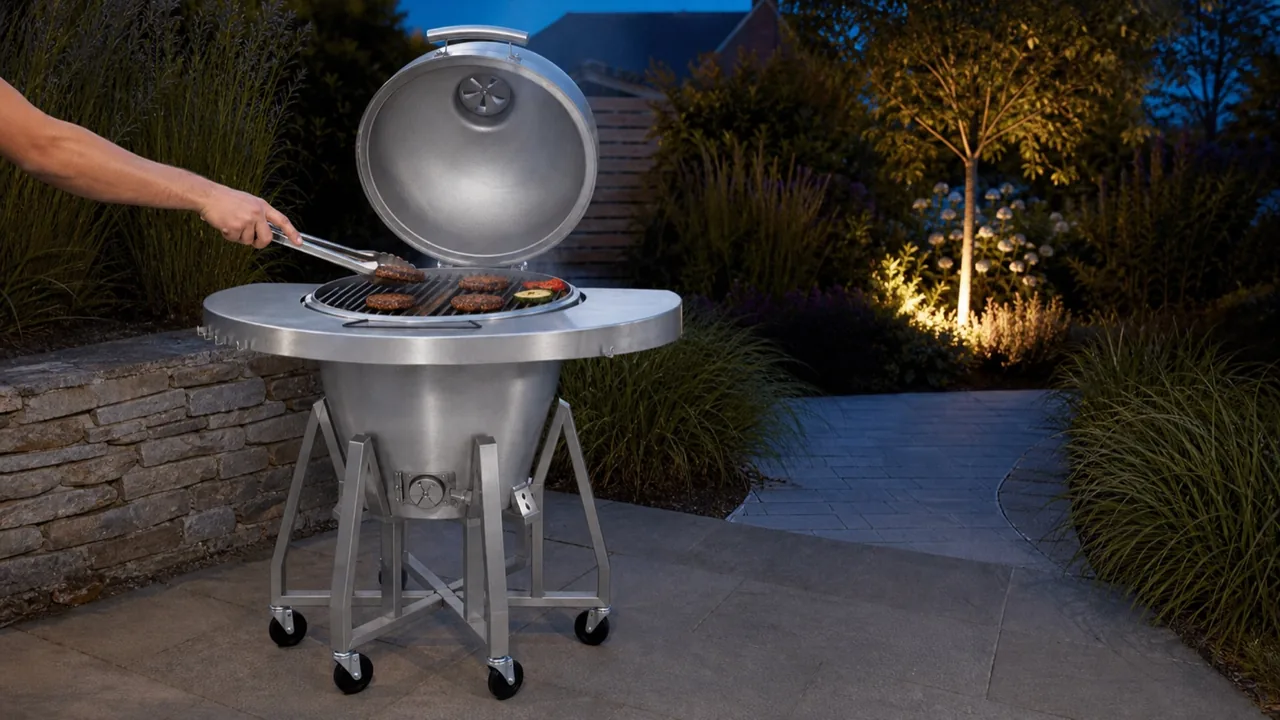
Cast-Aluminum Dome Grill
Custom project · Not for sale
Discuss this format → Prepare Your Inquiry
OEM / ODM · CHARCOAL COOKING
Find the right format for your charcoal-cooking range.
Compare cast and formed-metal formats, then define the body, finish and accessories for your project. The cast-aluminum dome and Kandu are custom project cases, not products offered for sale.
Discuss a Custom DesignFinal specifications and included accessories are confirmed against your selected model, drawing and sample.Source document: Metal Kamado Grill Series brochureStyle selector
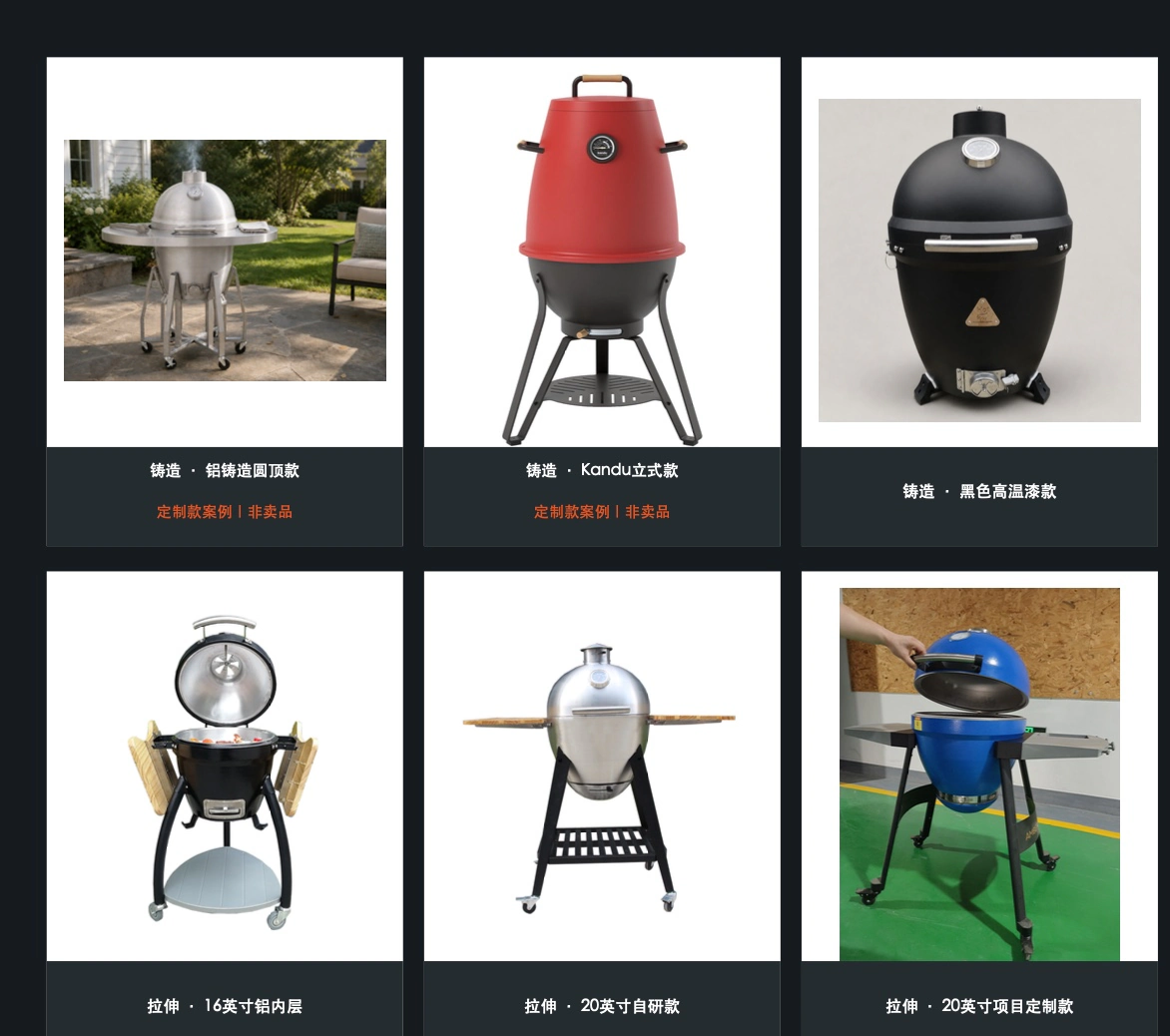
Start with the product format, then confirm its configuration. Images do not imply stock availability.
6 styles shown
Cast construction
Custom project · Not for sale
Discuss this format →Cast construction
Custom project · Not for sale
Discuss this format →Cast construction
Finish and configuration confirmed by project
Discuss this format →Sheet-metal forming
Inner-wall material confirmed by model
Discuss this format →Sheet-metal forming
Material and accessories confirmed by model
Discuss this format →Sheet-metal forming
Project-specific configuration
Discuss this format →Model-specific details
Each feature image identifies the product it applies to. Check the selected model before including a feature in your requirements.
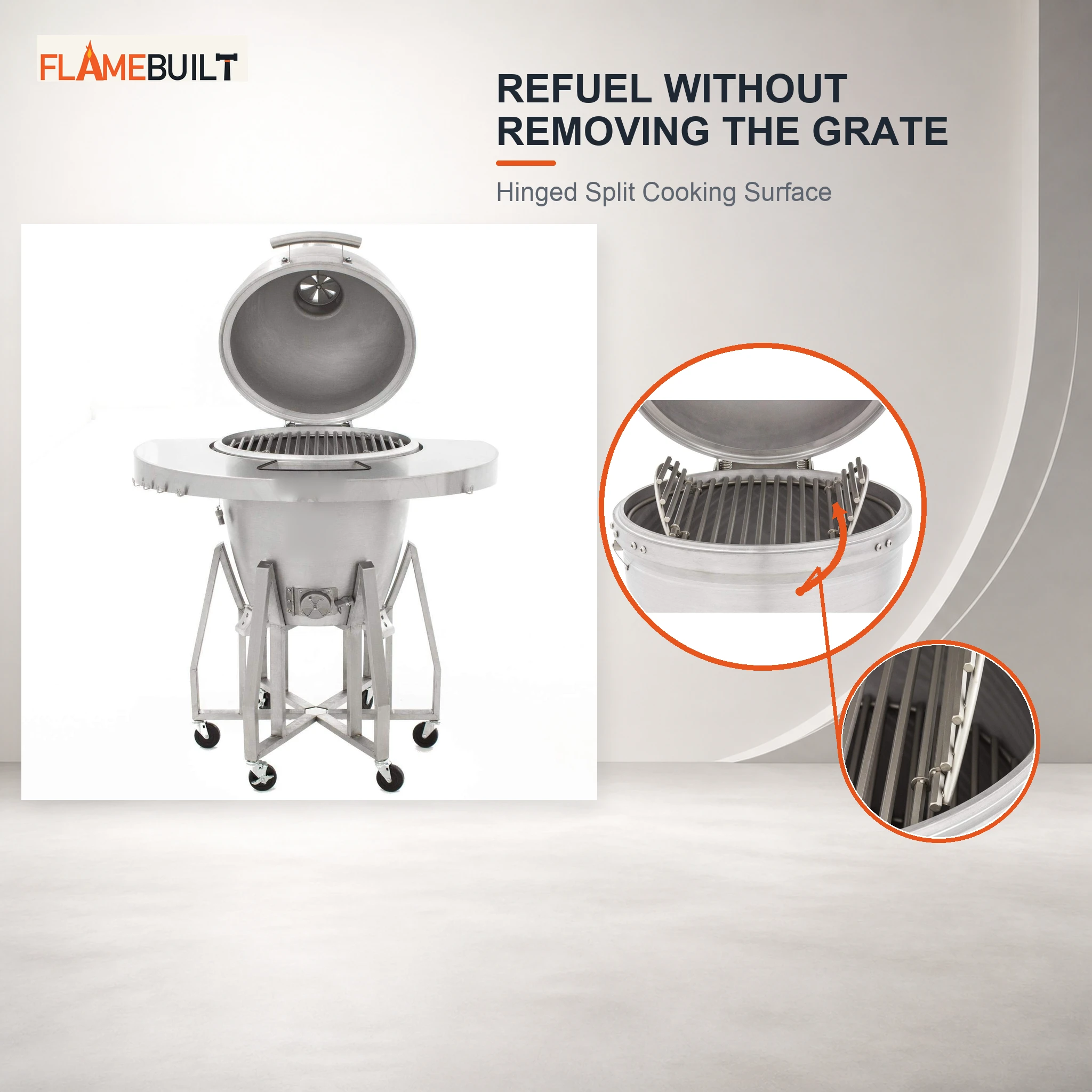
This illustrated detail belongs to the named product format. Confirm the drawing, configuration and accessories for your project.
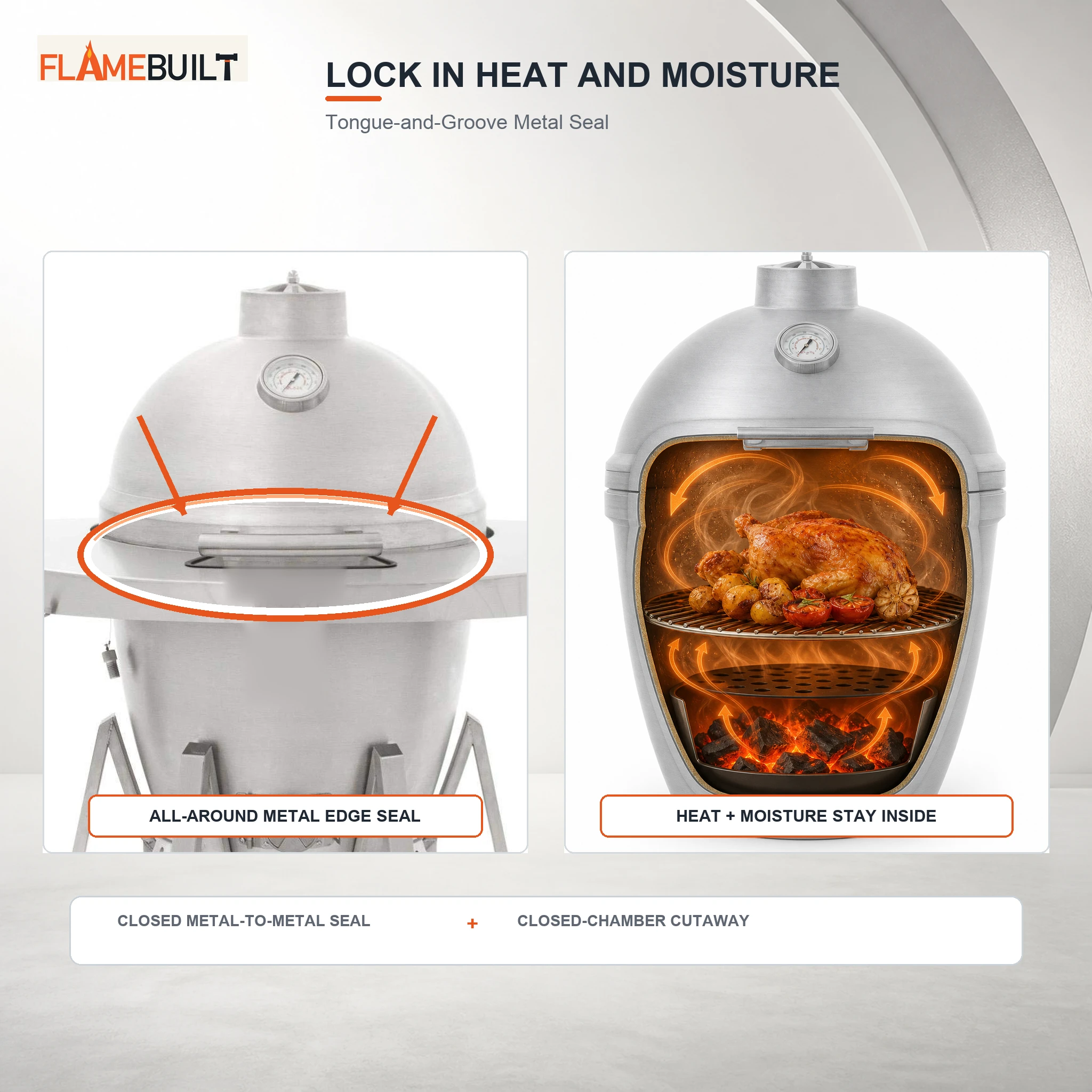
This illustrated detail belongs to the named product format. Confirm the drawing, configuration and accessories for your project.
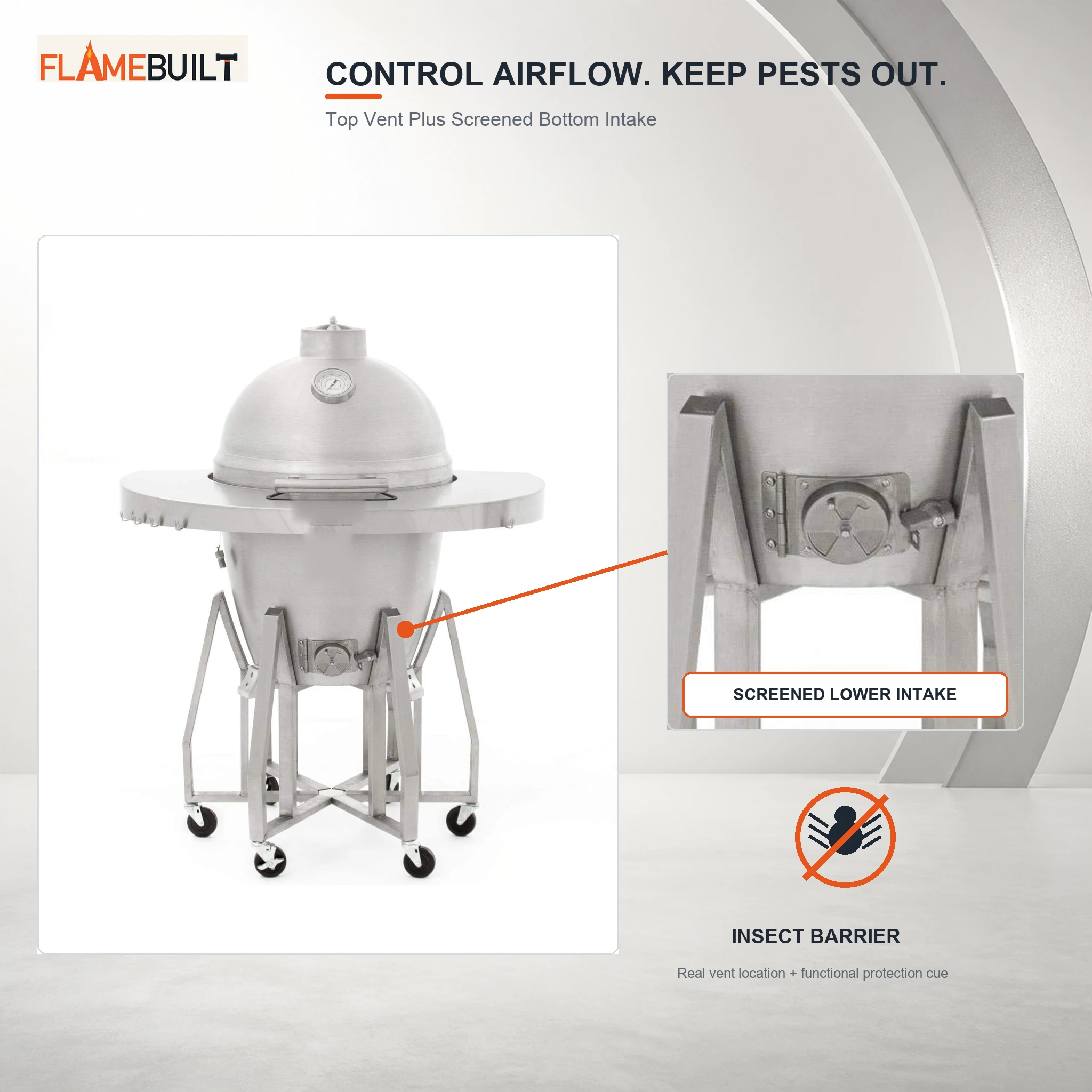
This illustrated detail belongs to the named product format. Confirm the drawing, configuration and accessories for your project.
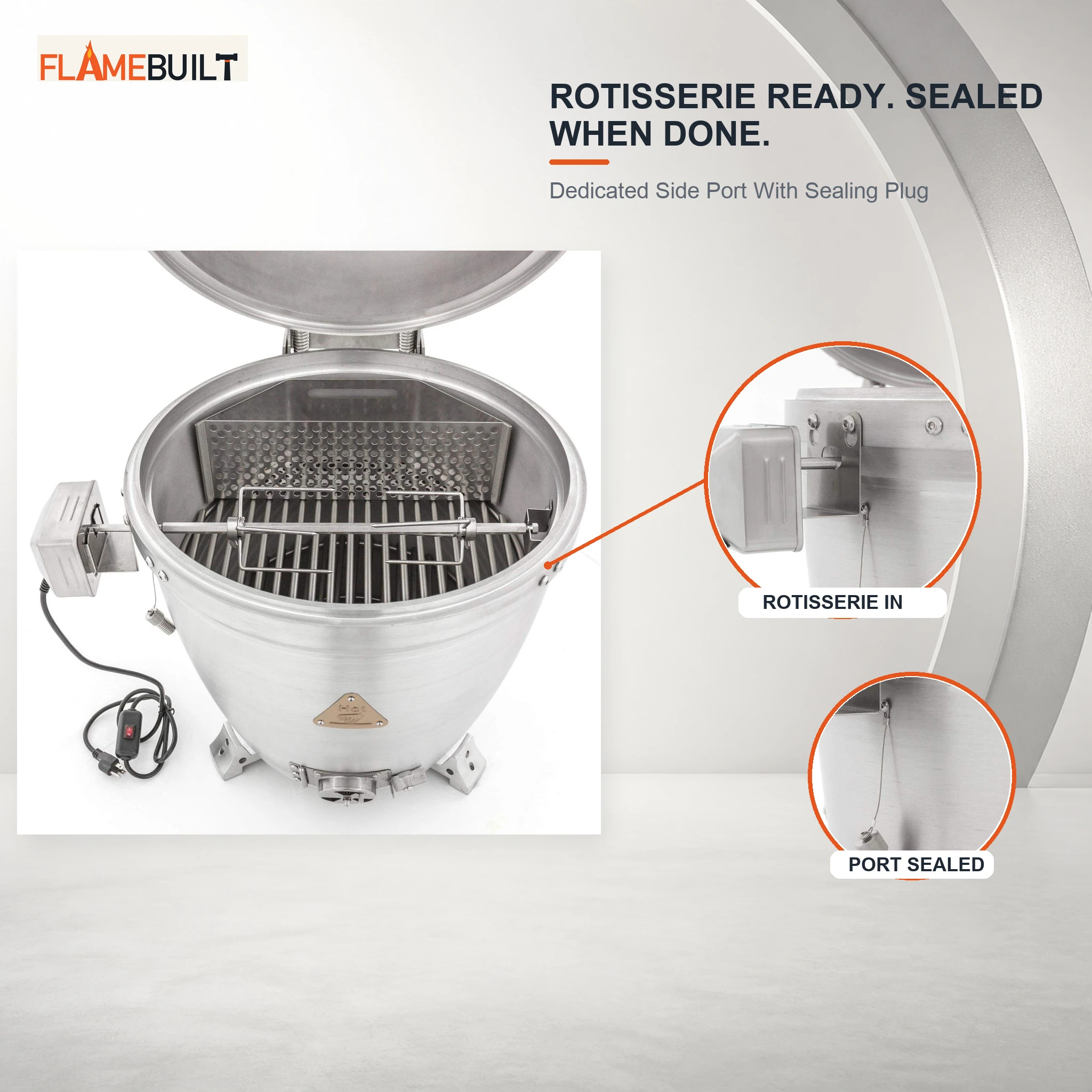
This illustrated detail belongs to the named product format. Confirm the drawing, configuration and accessories for your project.
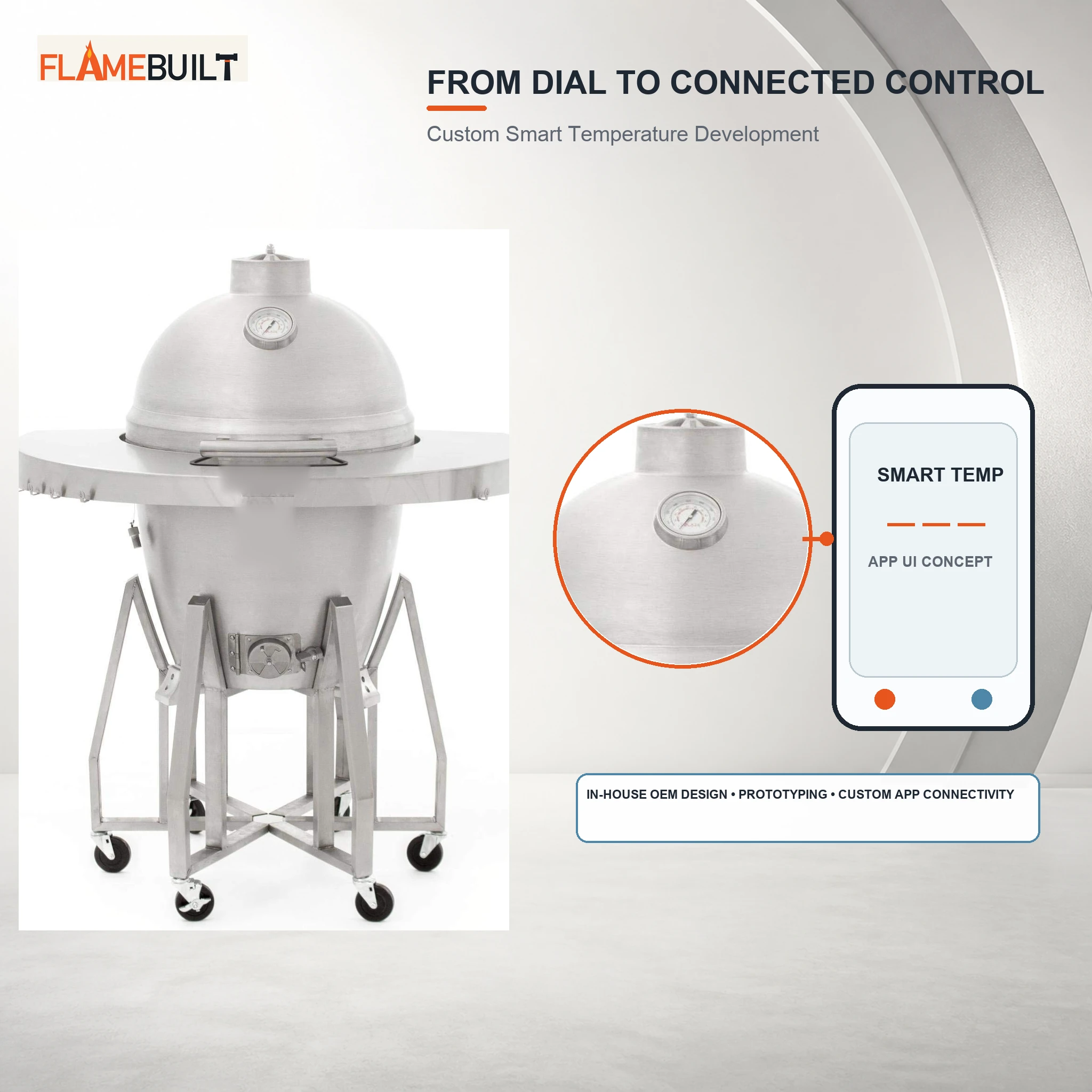
Connected sensing is a development concept only. Hardware, software, accuracy and control functionality require definition and validation.
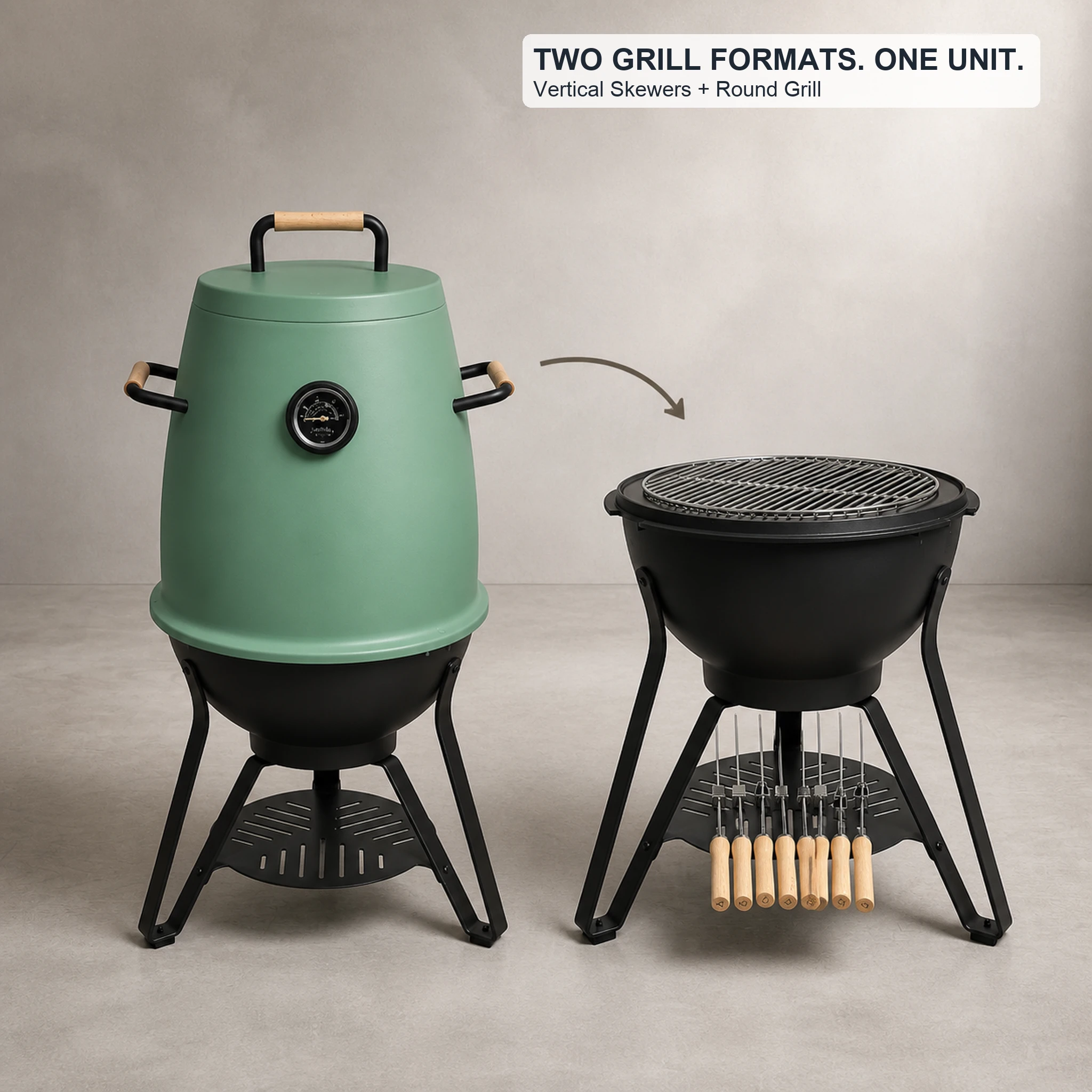
This illustrated detail belongs to the named product format. Confirm the drawing, configuration and accessories for your project.
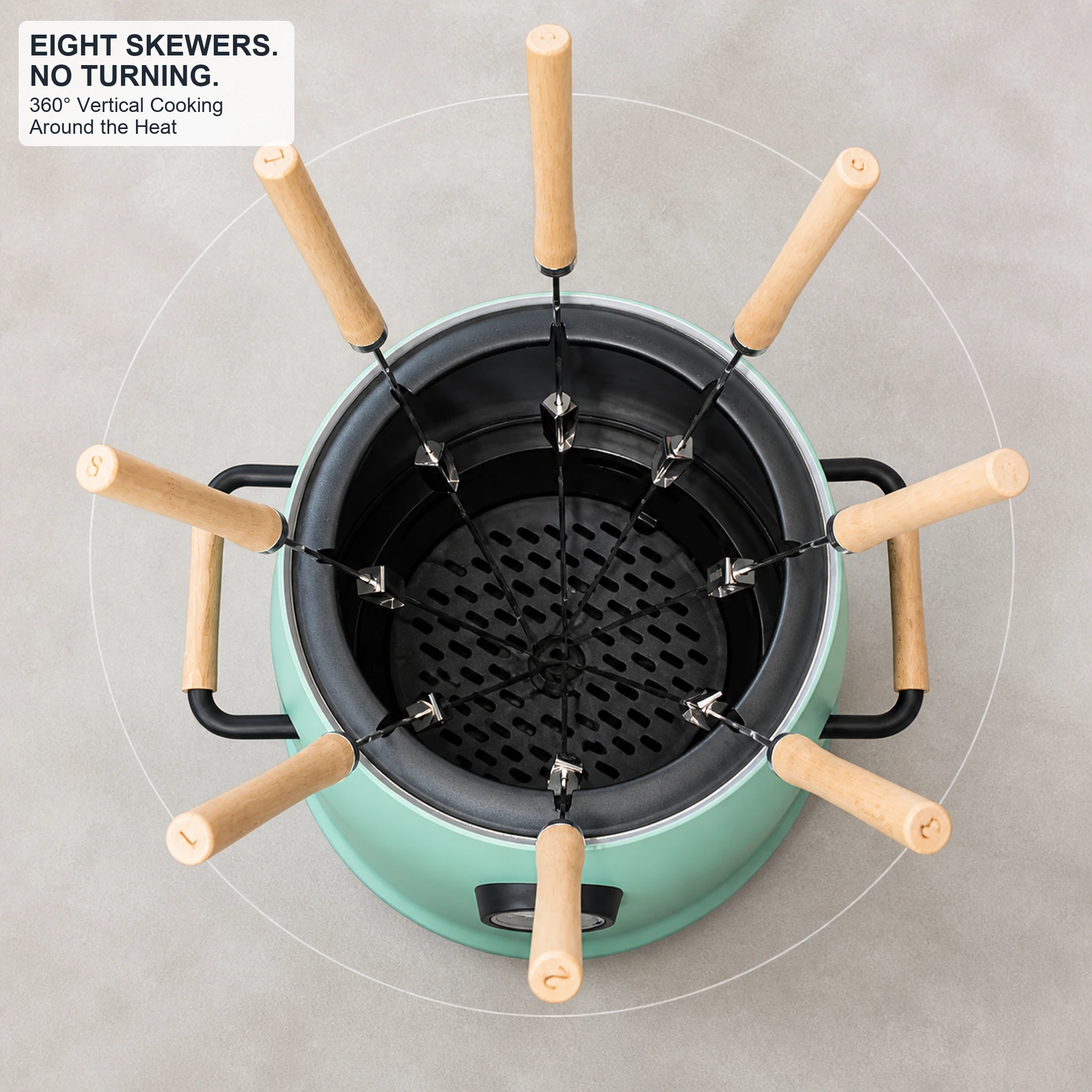
The illustration shows eight skewers. Final accessory count follows the project packing list; cooking results depend on operation.
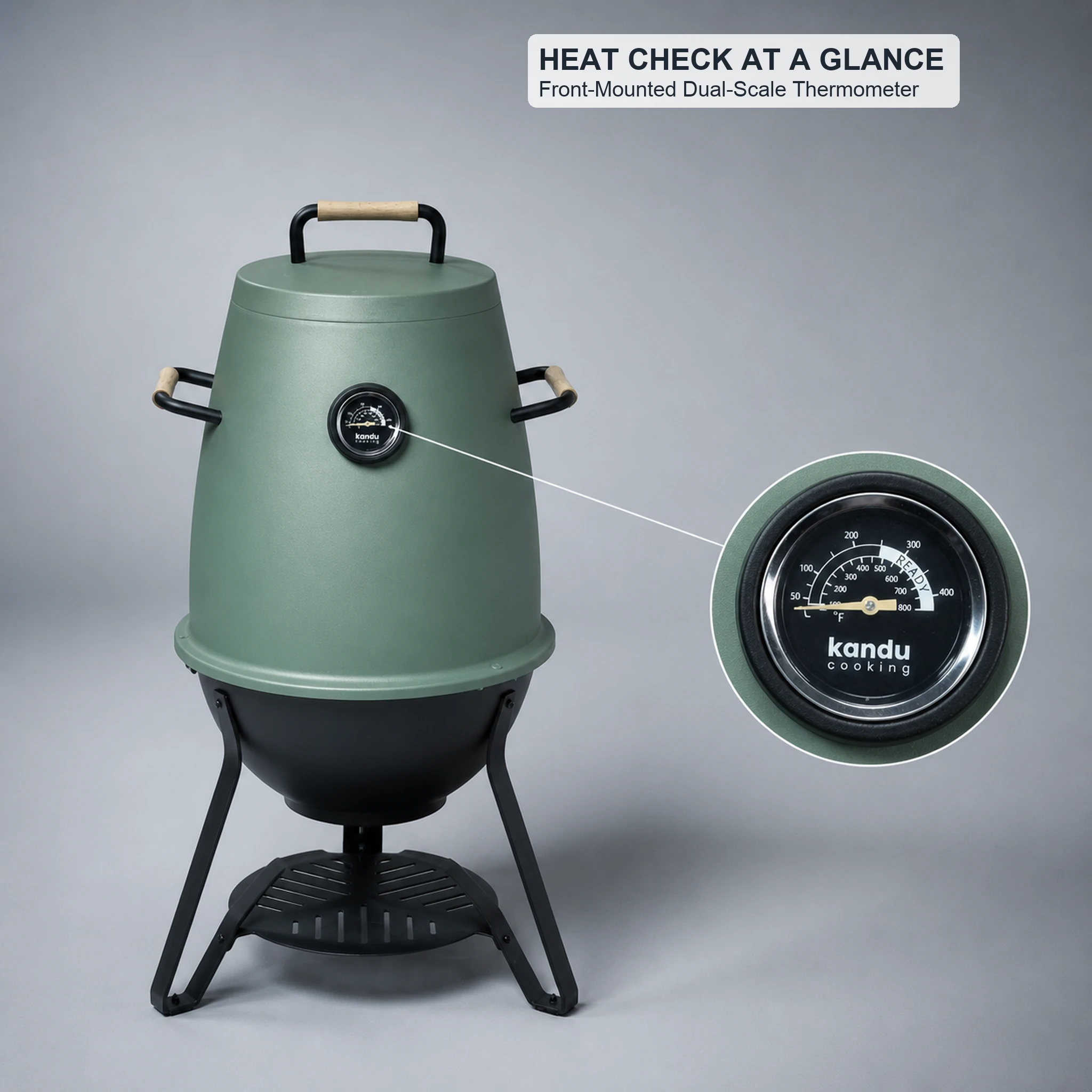
The dial indicates chamber temperature, not food-core temperature. Accuracy requires model-specific verification.
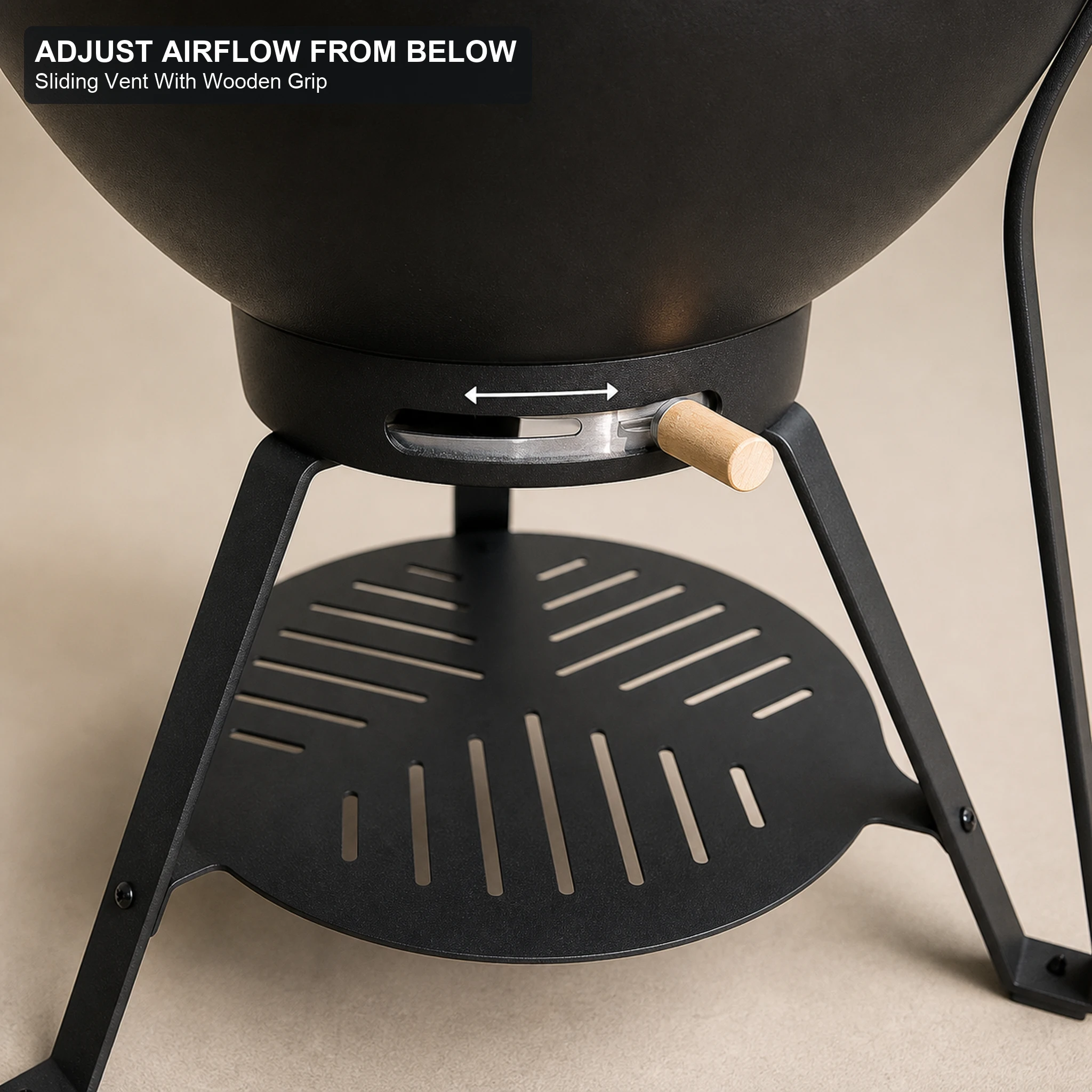
This illustrated detail belongs to the named product format. Confirm the drawing, configuration and accessories for your project.
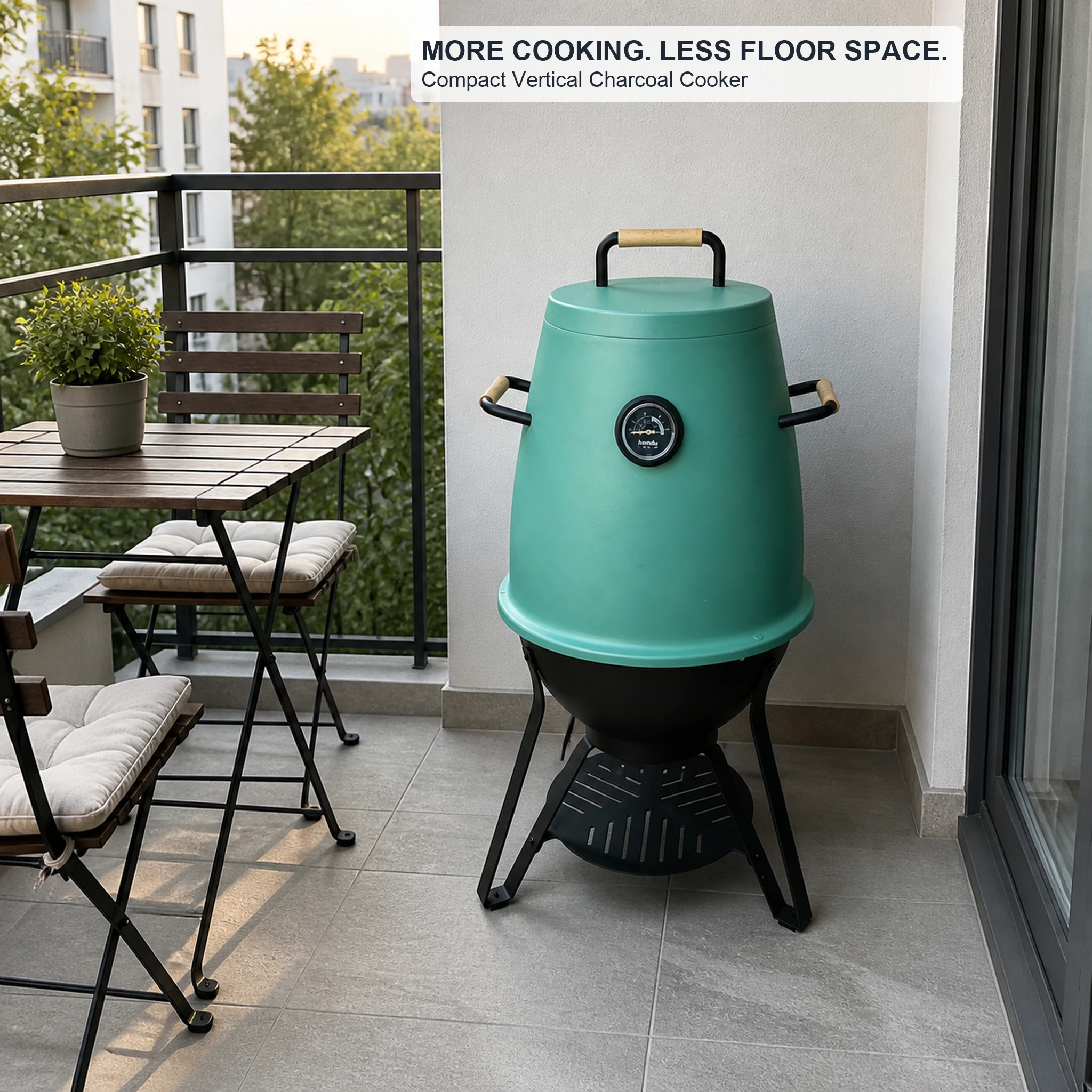
This illustrated detail belongs to the named product format. Confirm the drawing, configuration and accessories for your project.
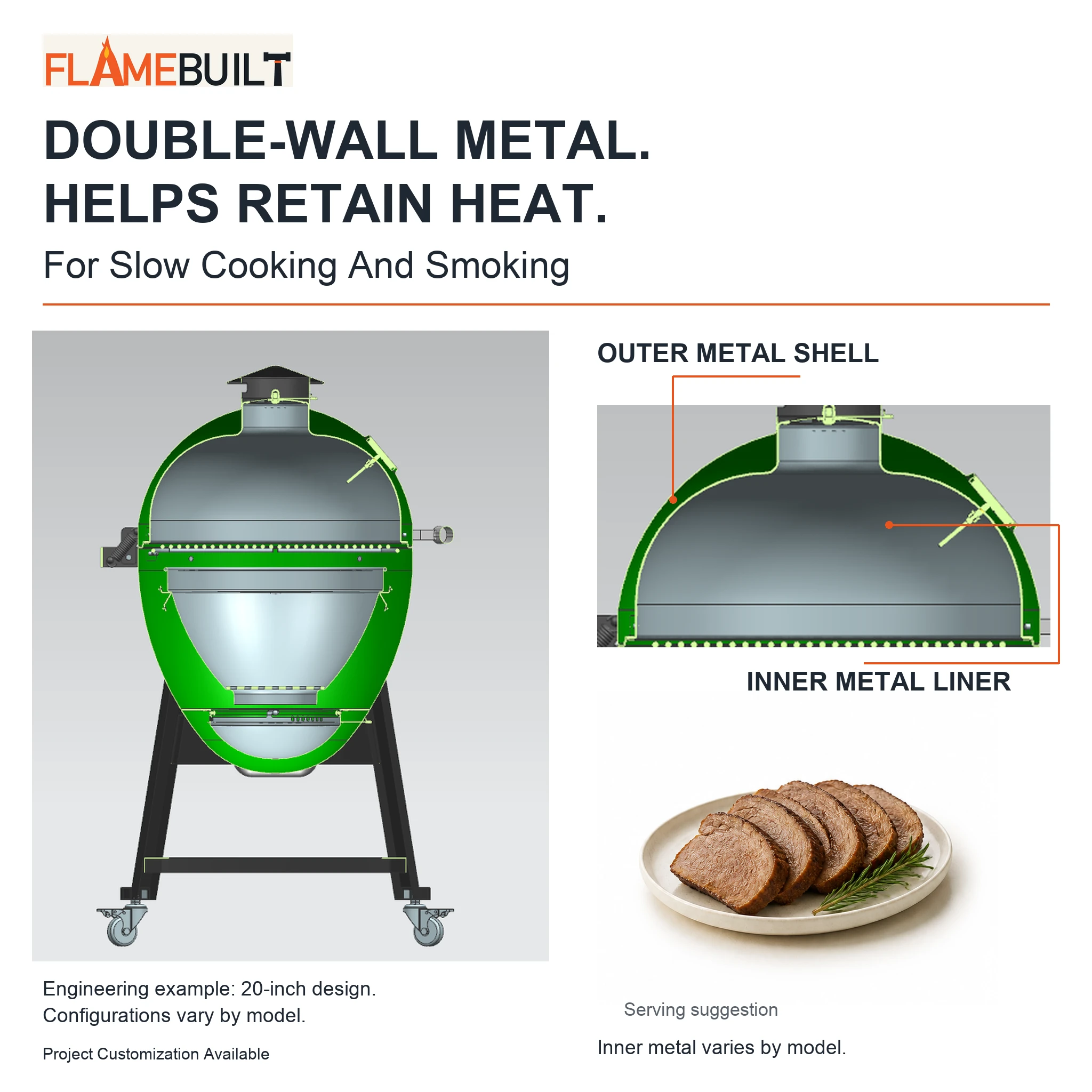
The inner liner and outer shell are distinct. Double-wall construction does not imply all-stainless construction or a vacuum layer.
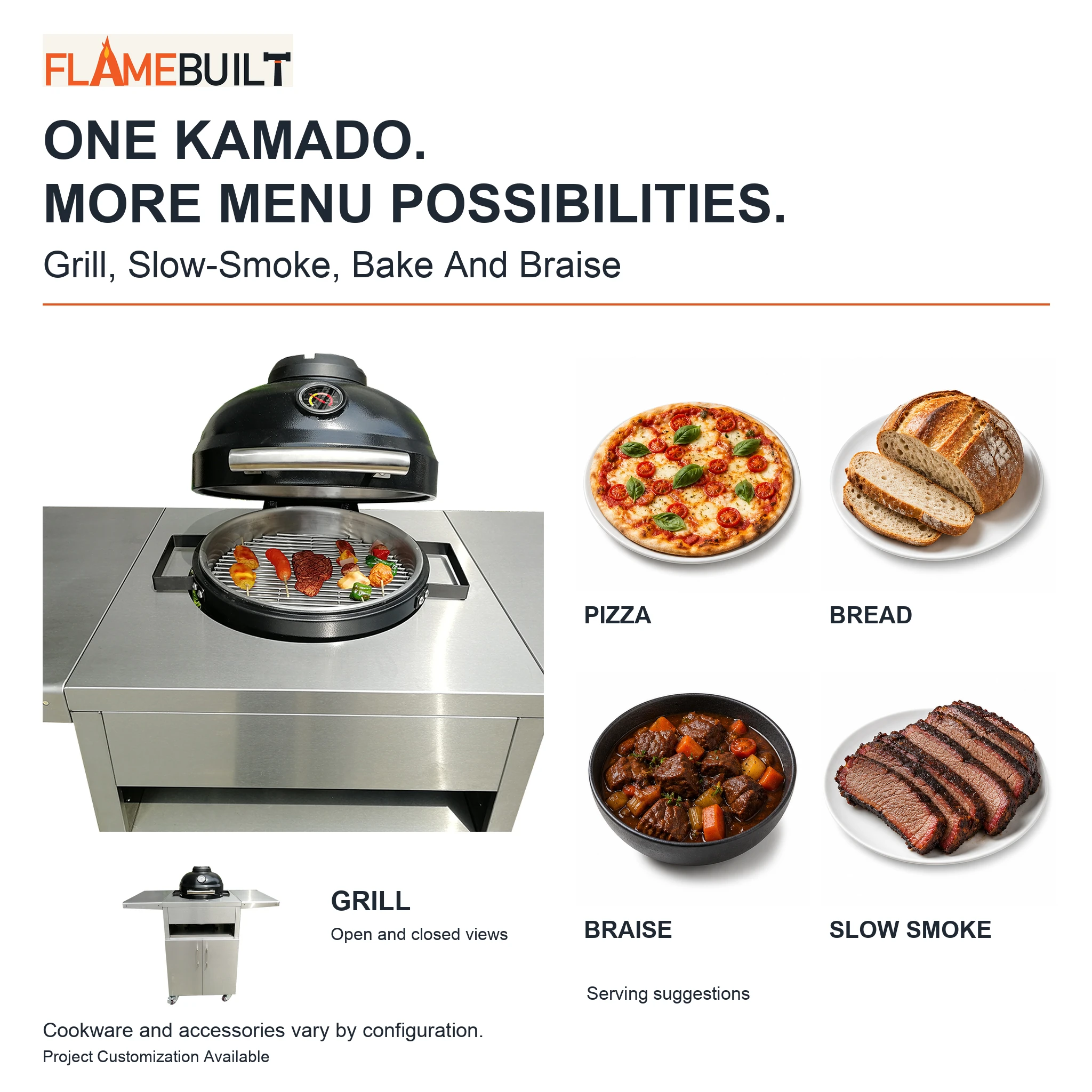
This illustrated detail belongs to the named product format. Confirm the drawing, configuration and accessories for your project.
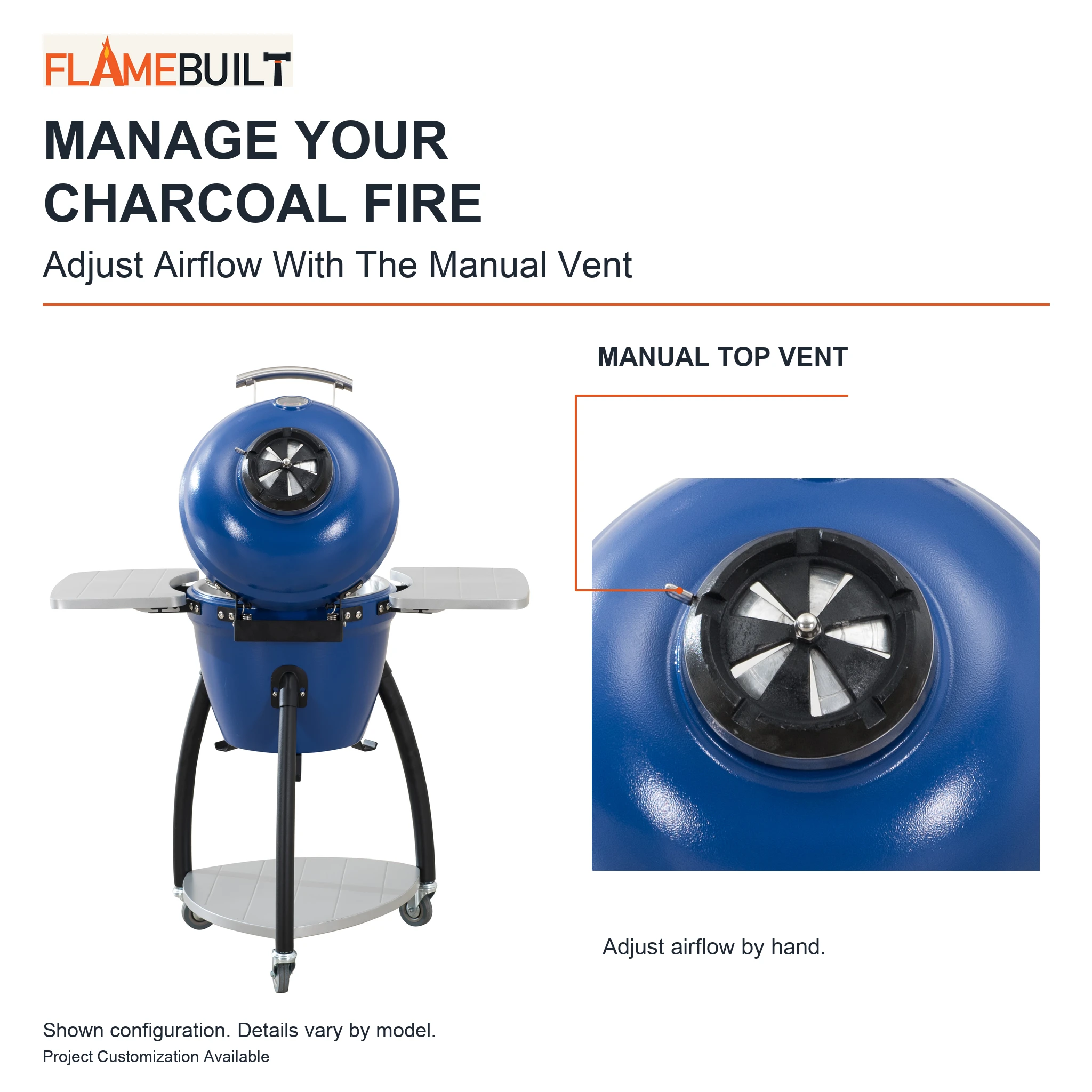
This illustrated detail belongs to the named product format. Confirm the drawing, configuration and accessories for your project.
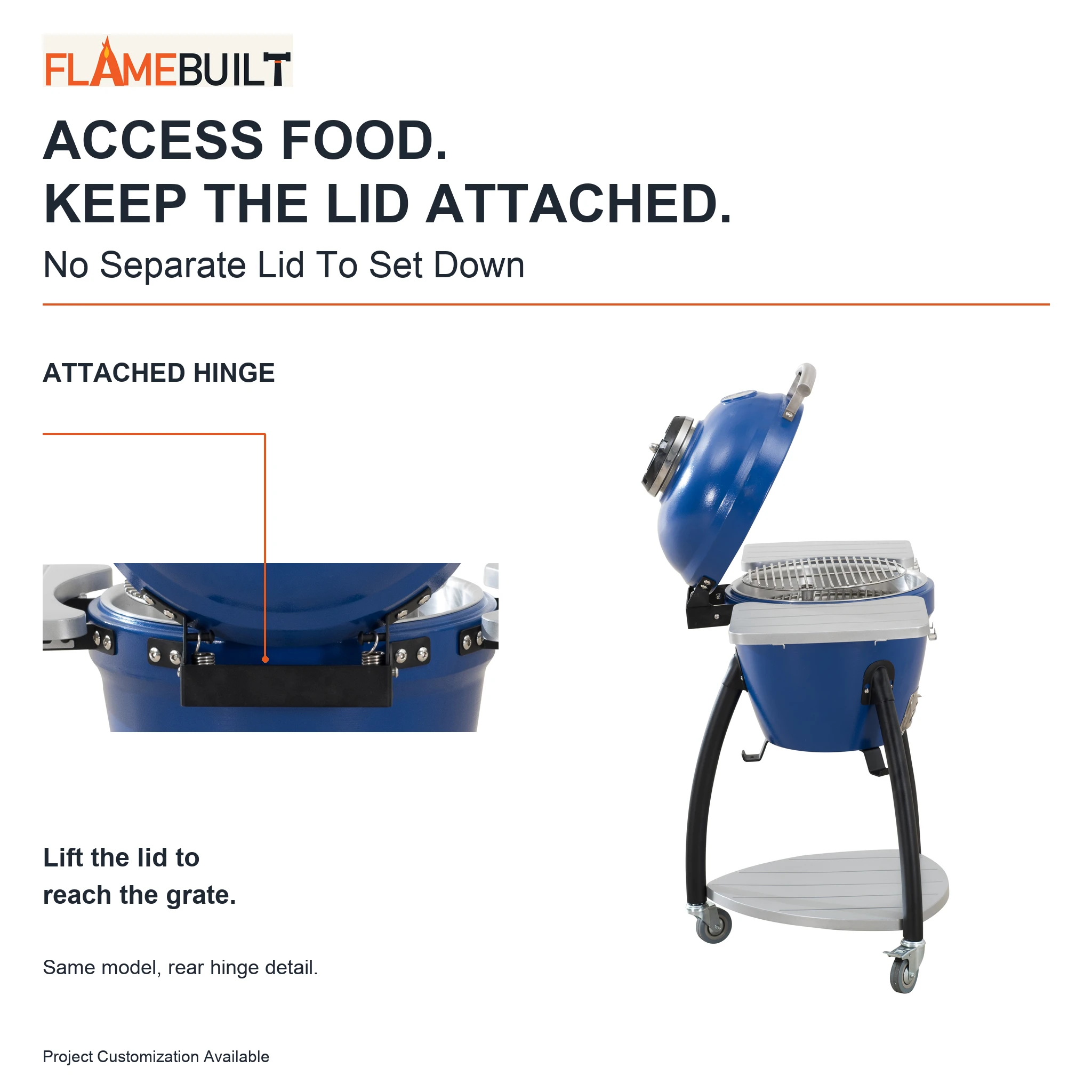
This illustrated detail belongs to the named product format. Confirm the drawing, configuration and accessories for your project.
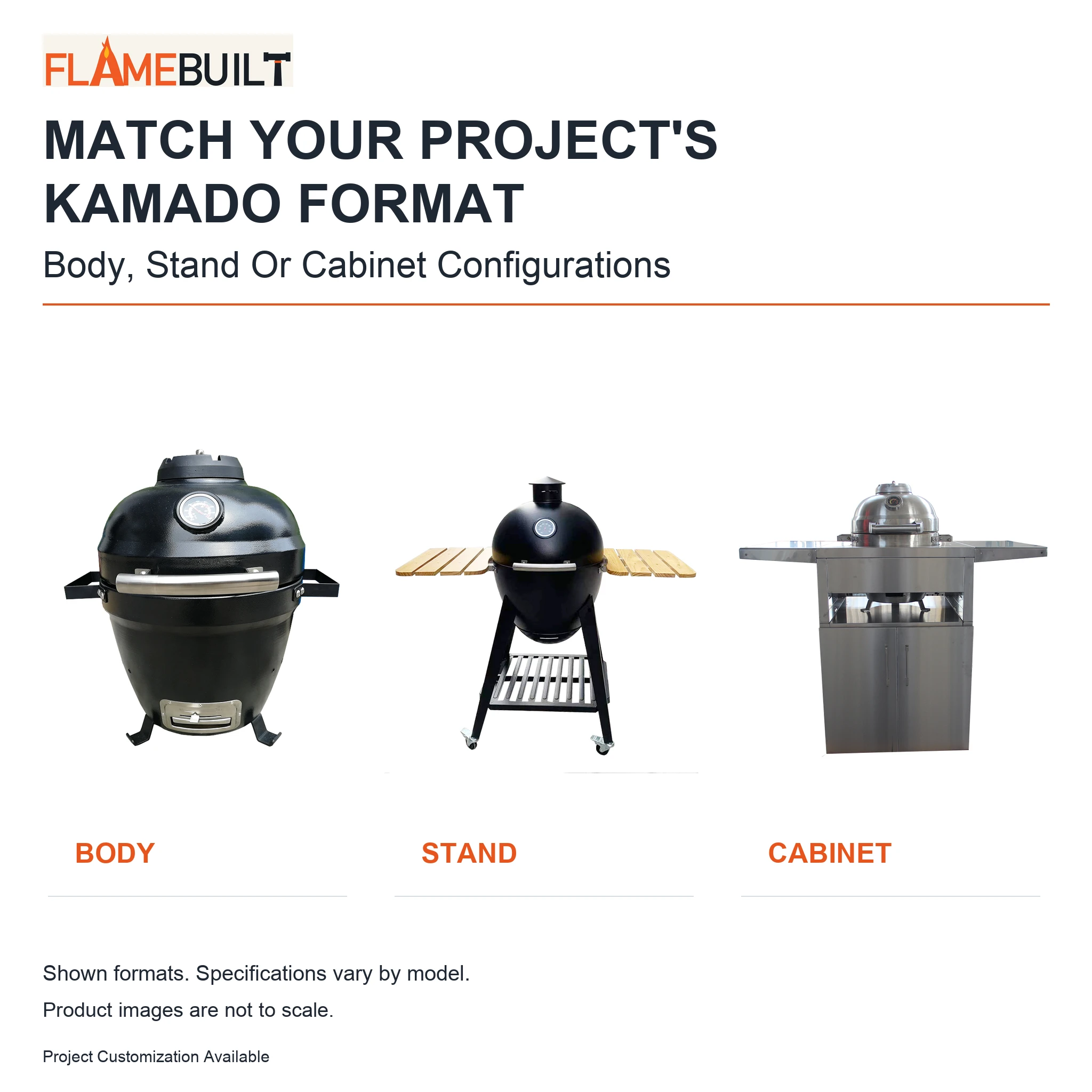
This illustrated detail belongs to the named product format. Confirm the drawing, configuration and accessories for your project.
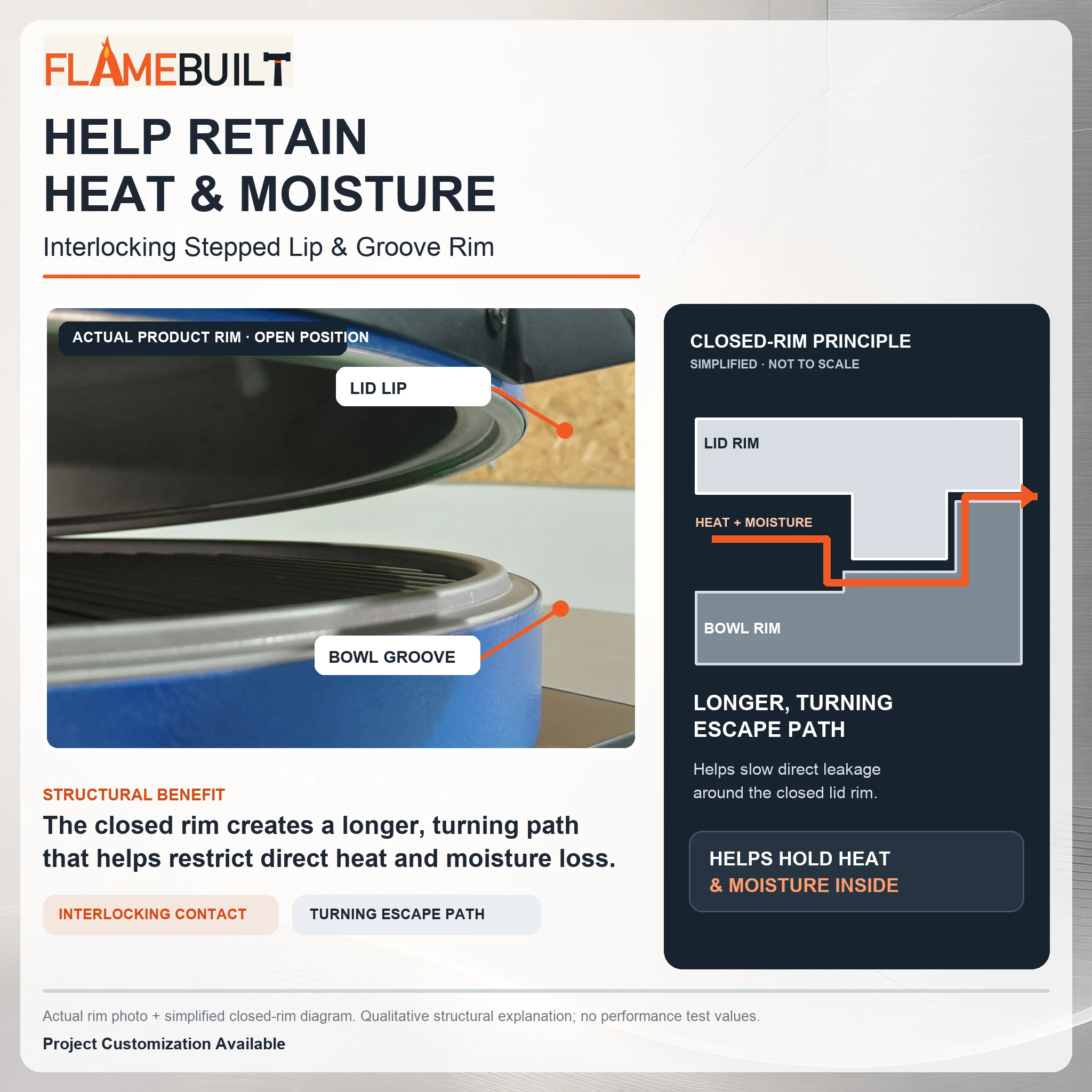
The illustrated lid/rim engagement concerns the shown sheet-metal format. Heat and moisture retention are not quantified performance guarantees.
How It Works
Lower inlet → charcoal combustion → cooking chamber → upper exhaust. This explains manual charcoal control; it is not a model-specific performance guarantee.
Cast and formed-sheet construction use separate body-making routes and share a manual heat-control principle. Custom chamber layouts require separate airflow review.
Illustrated with the cast-aluminum example.
Metal enters the liquid state.
The mold defines the shell.
Finish the shell and mating lid/body rims.
Casting method, alloy, thickness and tolerances follow the process specification. Conceptual molds and wall thickness are not production dimensions.
Separate shell and liner; liner material varies.
Start with flat sheet material.
The punch forms the sheet into a curved shell.
Assemble separate inner and outer layers.
Confirm each layer material. Double wall does not mean all-stainless or vacuum-insulated. Layer spacing is schematic, not a production dimension.
Adjust airflow, control charcoal and cook with the lid closed.
Manual vent opening changes the air and oxygen reaching the charcoal.
Combustion transfers heat through radiation and hot gases.
Heat transfers to food. Confirm the mating detail at the lid/body joint.
Hot gases leave the chamber. Intake and exhaust work together to complete the draft path; neither acts alone.
Adjust vents → observe temperature → adjust again. The lid dial is a reference; measure near the food for grate temperature. This is a heat-path concept, not a measured temperature map.
Fuel heat = food heating + exhaust loss + wall loss + change in stored heat
Validate each construction against the cooking task. Agree test conditions, fuel load, food load, vent positions and measurement points.
Supplied process classification, cast and formed-metal references, and original principle diagram dated 2026-08-31. Not a manufacturing drawing or test report. No numerical temperature, fuel-saving, heat-retention or safety-performance promise.
Brochure & inquiry
Use the English brochure to review the wider collection. Final configuration and any performance or testing claim require model-specific confirmation.
Download the Metal Kamado Grill Series brochure (PDF)Choose a starting point, then add your company, market and quantity to your inquiry.
Your selections: Not decided · Your Brand, Our Designs (ODM) · To be confirmed
Continue with these preferences →Review these preferences in your inquiry. This is not an approved configuration or quotation.Buyer questions
No. The cast-aluminum dome and Kandu vertical grill are custom project cases, not products offered for sale. Other displayed formats still require model, configuration, availability and commercial review.
The collection does not establish a universal performance ranking. Define your cooking-product positioning, body and inner-wall requirements, dimensions and configuration. Compare the selected designs and relevant sample or test evidence.
No. Features, materials, sizes and accessory combinations are format-specific. Identify the selected model and confirm the drawing, sample and packing list rather than combining details from different images.
Discuss Your Brand, Our Designs (ODM) with the model, logo, finish and packaging you need. Availability and the scope of any changes are confirmed by project. A new structure should be discussed as custom engineering.
There is no universal figure stated for the family. Provide the model, changes, quantity and target dates so tooling, sampling, production and packing can be reviewed. A preferred launch date is not a confirmed delivery commitment.
Agree the model-specific drawing, body and inner-wall construction, size, stand, finish and included accessories. Link the approved sample to the inspection requirements and packing list, including any required documentation for your market.
Plan your sourcing project
Prepare an OEM grill inquiry with the market, quantity, drawings, packaging and approval requirements needed for a useful manufacturing review.
Read the buying guide